
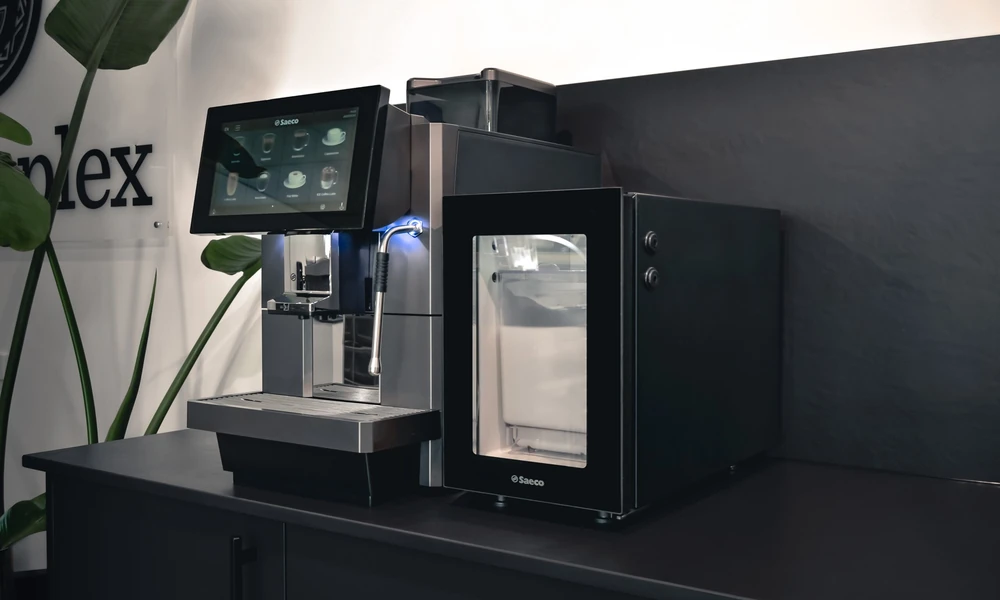
Beyond the obvious convenience of not having to buy equipment outright, coffee machine rental delivers a set of benefits that touch employee experience, day-to-day operations, and how an office presents itself to visitors, and looking at these together explains why the model has become so common across Singapore workplaces. Companies that only weigh the monthly cost against a purchase price tend to miss most of this value, since the real case for rental sits in areas that don’t show up neatly on an invoice.
Consistency That Employees Actually Notice
A well-maintained rental machine produces the same quality cup on a Monday morning as it does on a Friday afternoon, because servicing is scheduled proactively rather than reactively. Staff notice this consistency more than they’d admit, since a pantry machine that occasionally produces watery or burnt coffee becomes a small daily irritation that erodes goodwill in ways management rarely tracks. Rental providers build their reputation on machines performing reliably, which puts pressure on them to keep water filters, grinders, and brew settings properly calibrated across every unit in their fleet, not just the ones a client happens to be inspecting that week. That commercial incentive works in the office’s favour, since a provider with a poor reputation for reliability struggles to retain clients at renewal, which keeps service standards honest in a way that internal maintenance under ownership rarely enforces as consistently.
Freeing Up Internal Resources
Every hour an office manager or HR generalist spends troubleshooting a jammed machine or chasing a technician is an hour not spent on their actual responsibilities. Singapore offices, particularly SMEs without a dedicated facilities role, often underestimate how much of this low-level operational drag accumulates over a year. Rental agreements shift that burden onto a provider whose core business is exactly this kind of maintenance, letting internal staff treat coffee as a solved problem rather than a recurring task on their to-do list. Over the course of a year, that reclaimed time adds up to a genuinely meaningful amount of internal capacity redirected toward work that actually moves the business forward.
A Wider Range of Machine Options Without the Risk
Renting lowers the stakes of trying a machine type that might not suit your office, since a company unsure whether staff will prefer a bean-to-cup system over a simpler capsule setup can test one without committing years of capital to the decision. This matters in Singapore’s competitive office rental market, where companies frequently relocate or restructure their floor plans and need equipment that can move or scale with them rather than being locked into a single configuration purchased years earlier. A company that signs a two-year office lease with an option to expand shouldn’t have to make an equally rigid five-year bet on coffee equipment sized for today’s headcount alone.
Supporting a Better Client and Candidate Experience
Coffee is often the first thing offered to a visitor, whether that’s a client meeting, an investor pitch, or a candidate interview, and the quality of that small moment shapes an impression more than most companies realise. A rented machine capable of producing café-quality coffee on demand gives reception and meeting room areas a level of polish that’s hard to replicate with instant coffee or an ageing filter machine nobody has descaled in months. Companies weighing this kind of upgrade can look at what a provider offering coffee machine rental tailored to Singapore offices actually includes, since the visitor-facing benefit often justifies the cost on its own for client-facing businesses.
Budget Predictability for Growing Companies
Rental converts an unpredictable equipment cost into a fixed monthly figure, which matters enormously for companies in a growth phase where headcount, office footprint, and spending priorities shift quarter to quarter. A finance team can plan around a known rental fee far more easily than around the risk of an owned machine failing unexpectedly and requiring an unbudgeted repair or replacement in the middle of a tight quarter. This predictability becomes particularly useful when a company is preparing budgets a year ahead, since a rental line item can simply be carried forward at a known figure rather than requiring a fresh estimate each cycle for maintenance costs that are inherently hard to forecast under ownership.
Environmental and Waste Considerations
Rental providers that manage a fleet of machines are also positioned to handle end-of-life equipment responsibly, refurbishing or redeploying units rather than leaving individual companies to figure out disposal on their own. This fleet-level approach to maintenance and lifecycle management tends to reduce the number of machines that end up prematurely discarded simply because a company didn’t have the expertise to keep an ageing unit running properly. For companies increasingly asked to account for their environmental footprint in vendor or client questionnaires, being able to point to a managed equipment lifecycle rather than a trail of individually discarded machines is a small but genuine point in their favour.
Taken together, these benefits explain why coffee machine rental has become the practical default for Singapore offices of almost every size, since the value extends well past the machine itself into staff morale, operational bandwidth, and the impression a company makes on everyone who walks through its doors. Any office evaluating the decision fresh would do well to weigh these softer, harder-to-quantify factors alongside the monthly cost rather than treating price as the only variable that matters.