
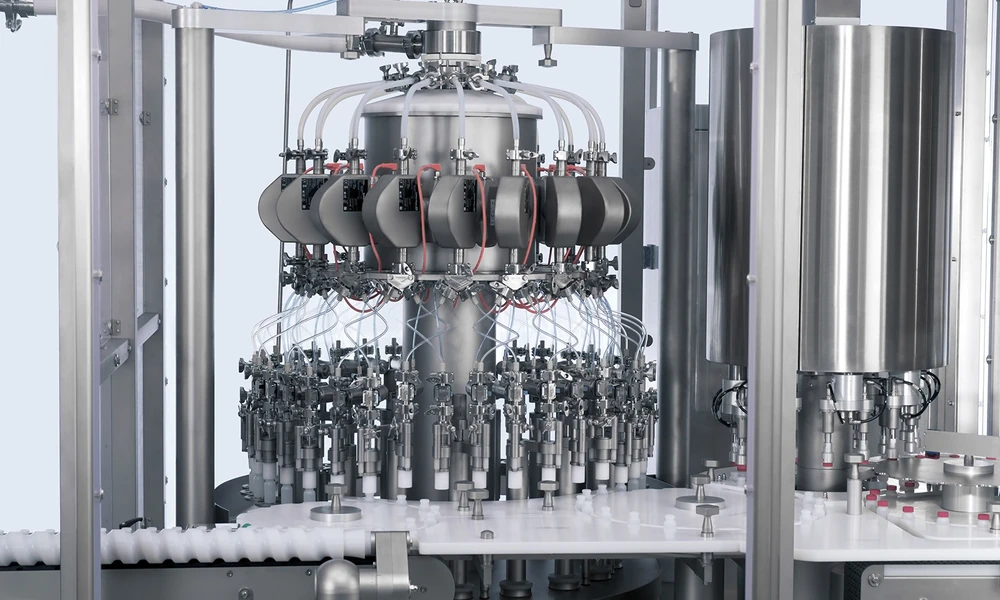
Many manufacturers assume that any machine described as a filler will work for their product, treating the category as interchangeable once the price and output rate look reasonable. In practice, the product’s viscosity, the container format and the required accuracy narrow the realistic options considerably, and choosing without accounting for those factors is one of the more expensive mistakes a growing production line can make. Understanding what a filling machine singapore buyer actually needs to evaluate makes the shortlist much shorter and much more useful.
Why ‘Filling Machine’ Covers a Wide Range of Equipment
The term spans everything from simple gravity-fed units for thin liquids to piston fillers for viscous pastes and volumetric or weight-based systems for precise dosing. Two machines both labelled fillers can differ enormously in mechanism, accuracy and suitable product range, which is why a spec sheet needs to be read against the actual product, not just the category name. Treating the category as a single interchangeable product type is one of the most common reasons a newly purchased machine underperforms once it reaches the factory floor.
Matching a Machine to Product Viscosity
Thin liquids, thick pastes and products containing particulates each demand a different filling mechanism, since a pump or valve suited to water will struggle with a viscous sauce or clog on a chunky ingredient. Getting this match wrong shows up quickly as inconsistent fill levels, dripping, or product left behind in the lines between batches. Running a trial with the actual product, rather than a water-based stand-in, is the only reliable way to confirm compatibility before committing to a purchase.
Container Format and Line Compatibility
Bottles, pouches, tubs and pails each interact with a filling head differently, and a machine built around one format rarely adapts well to another without dedicated tooling. Manufacturers running multiple product lines through varied packaging should confirm changeover time and tooling cost upfront, since this is where running costs quietly accumulate over a year. A machine that looks cheaper on paper can end up costing more once frequent format changeovers are factored into daily output.
Accuracy Requirements and Regulatory Standards
Food, cosmetics and pharmaceutical products in Singapore are subject to weights and measures regulations that set tolerances for declared fill volumes, and consistently underfilling or overfilling can trigger compliance issues well before it becomes a customer complaint. Volumetric and weight-based systems generally hold tighter tolerances than simple timed-fill mechanisms, which matters most for higher-value products. Manufacturers exporting to multiple markets should also check that the equipment can meet the stricter of any overlapping regulatory requirements rather than the local minimum alone.
Manual, Semi-Automatic and Fully Automatic Options
Manual fillers suit low-volume or highly variable production where flexibility matters more than raw speed, while semi-automatic units bridge the gap for growing operations not yet ready for full automation. A semi-automatic filling line is often the more sensible step for a business scaling past manual production, since it reduces labour without the capital commitment of a fully automated system.
Hygiene and Cleaning Considerations
Manufacturers working with food, cosmetics or pharmaceutical products need a machine that can be broken down and cleaned thoroughly between batches without excessive downtime. Sanitary design features such as clean-in-place systems and materials that resist product buildup are worth evaluating even if they add to the upfront cost, since they reduce the risk of contamination and cross-batch carryover.
Space and Layout Constraints in Local Facilities
Industrial space in Singapore is expensive relative to many manufacturing hubs, which makes a filler’s physical footprint a genuine cost consideration rather than an afterthought. Compact or modular configurations that integrate closely with upstream and downstream equipment often make more sense here than standalone units that require extra floor space to bridge between stations.
Local Servicing and Parts Availability
Equipment imported without local support can leave a line stalled for weeks waiting on parts or a technician to fly in, which is a costly risk for any manufacturer running tight production schedules. Confirming local servicing, spare parts stock and response times before purchase is as important as comparing the machines themselves. A supplier who can dispatch a technician within a day makes a meaningful difference compared with one who ships parts from overseas on request.
Budgeting Beyond the Purchase Price
The sticker price is only part of the real cost; changeover tooling, consumables, energy use and scheduled maintenance all add up over the equipment’s working life. Manufacturers who compare machines on purchase price alone often find the cheaper option becomes the more expensive one within a couple of years of operation.
Choosing the Right Filling Machine for Your Line
Start from the product and packaging, not the machine category, and work backwards to the mechanism, accuracy and hygiene standard that combination actually requires. Ask for a trial run with your own product wherever possible, since a demonstration on water or a generic sample rarely reveals how a machine handles your specific formulation. Choosing the right filling machine singapore manufacturers can rely on comes down to this match, not to whichever option happens to have the fastest advertised output rate.